

When someone asks ChatGPT, Gemini, Perplexity, or another AI assistant for a product, service, company, or local recommendation, the answer is rarely based on what became popular last week.
AI systems increasingly rely on patterns built from information they can discover, evaluate, connect, and repeatedly associate with a brand. That means the businesses being recommended today may have spent years building the signals that make them easier for AI systems to understand and trust.
This creates an uncomfortable reality for businesses starting their AI search strategy now: getting recommended by AI is not simply a visibility exercise. It is the result of accumulated digital evidence.
The longer a brand consistently builds useful content, credible mentions, strong local signals, positive customer experiences, and a technically reliable website, the more evidence exists for search systems and AI platforms to work with.
And as more businesses compete for recommendations inside AI-generated answers, the gap between established digital authorities and late starters can become increasingly difficult to close.
Why AI Recommendations Are Becoming a Long-Term Game
Traditional search already rewards websites that demonstrate relevance, authority, usefulness, and trust. AI-powered search adds another layer: the system needs enough reliable information to understand what a business does, who it serves, where it operates, and why it should be mentioned in an answer.
That understanding does not necessarily come from one webpage.
An AI system may encounter a brand through its website, business listings, reviews, industry publications, directories, news coverage, educational content, third-party references, and other publicly available sources. These pieces can collectively create a clearer picture of the business.
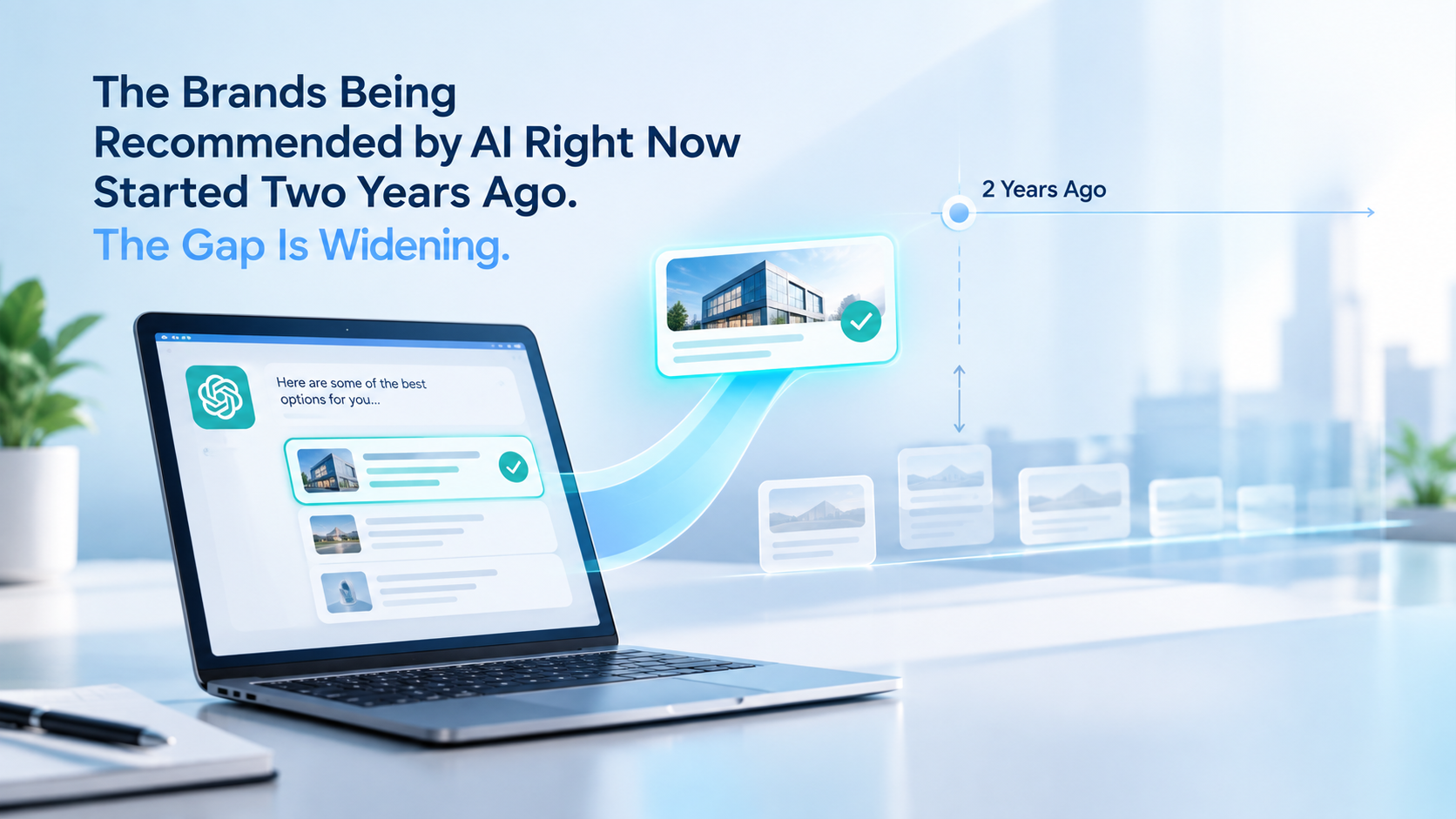
This is why a company that started building its digital presence two years ago can have an advantage over a competitor that suddenly begins publishing content today.
The older brand may have accumulated more references, more content, more customer feedback, stronger topical coverage, and a longer history of consistent information.
That does not mean newer businesses cannot compete. It means they need to build meaningful signals deliberately rather than expecting a few optimized pages to produce immediate AI recommendations.
Getting Recommended by AI Starts With Being Understandable
Before an AI system can confidently recommend a company, it needs to understand that company.
Consider a business with a vague website, inconsistent company information, thin service pages, limited local references, and little evidence of expertise. Even if the business provides excellent services, AI systems may have difficulty establishing what makes it relevant to a particular question.
Now consider a business with detailed service information, clear locations, consistent business details, expert-led resources, customer reviews, industry references, and content answering specific customer questions.
The second business gives search systems substantially more context.
Getting recommended by AI therefore begins with making your business easy to identify, interpret, and connect with relevant topics.
This involves more than inserting keywords into pages. It requires building a consistent digital identity.
Your website should clearly communicate your services. Your location information should be accurate. Your content should demonstrate genuine knowledge. Your business listings should reinforce the same information. Your reputation should support the claims you make.
Over time, these signals can work together to create a stronger digital footprint.
The Two-Year Advantage Is Really a Trust Advantage
The idea that brands being recommended by AI “started two years ago” should not be interpreted as a strict technical rule. AI does not simply rank businesses according to their age.
The important point is accumulation.
A business that has spent two years publishing useful resources may have dozens of pages addressing customer questions. It may have earned relevant mentions and links. Its local profiles may contain years of reviews. Other websites may have referenced its expertise. Its brand information may appear consistently across multiple sources.
Those accumulated signals give AI systems more information to evaluate.
This is particularly important for local businesses. People often ask AI assistants questions such as:
- Which dentist should I consider in my area?
- What are the best roofing companies nearby?
- Which local accountant specializes in small businesses?
- Who provides emergency HVAC services near me?
A business that has spent years developing strong local relevance has more opportunities to appear in the information ecosystem behind these questions.
For businesses competing in London, experienced seo consultants london may focus on building these signals over time rather than treating AI search as a separate campaign.
The same principle applies to traditional search. Strong organic visibility, local authority, useful content, and brand reputation are not usually created through one campaign. They develop through consistent work.
Why Local Businesses Cannot Ignore AI Search
Local search is becoming increasingly conversational.
Instead of searching for “plumber London,” a potential customer might ask an AI assistant, “Who is a reliable plumber near me that handles emergency repairs and has good customer reviews?”
That question contains several layers of intent: location, service type, urgency, reputation, and suitability.
AI systems need to identify businesses that can satisfy those combined requirements.
This makes local SEO more than a matter of appearing on a map. Businesses need accurate location signals, strong service information, authentic reviews, relevant mentions, and content that demonstrates local expertise.
A local seo company london may therefore need to think beyond traditional map rankings and consider how a business is represented across the broader digital ecosystem.
The same shift matters for smaller businesses. Large companies can often generate substantial amounts of content and brand recognition, but smaller businesses can compete by developing a highly specific area of expertise.
For example, instead of trying to become the most visible company for every possible service, a small business can establish authority around a particular service, audience, problem, or geographic area.
Specificity gives AI systems more useful context.
What Businesses Should Build Before They Expect AI Recommendations
There is no reliable shortcut that guarantees an AI assistant will recommend a particular business.
However, businesses can strengthen the information AI systems have available by developing several foundational assets.
Build Deep Topic Coverage
A single service page rarely answers every question a potential customer has.
Create useful resources around pricing considerations, common problems, comparisons, processes, maintenance, mistakes, regulations, and customer questions. The objective is not to create hundreds of shallow articles but to establish meaningful coverage around subjects that matter to your audience.
Strengthen Local Signals
Keep business name, address, phone number, opening hours, service areas, and other important details consistent across relevant platforms.
Create location-specific content when there is genuine local relevance rather than producing near-identical pages for every city.
Earn Independent Mentions
AI systems can benefit from information outside your own website.
Industry publications, reputable directories, associations, local organizations, news websites, partnerships, and other relevant sources can provide independent evidence about a business.
The quality and relevance of these references matter more than simply collecting large numbers of links.
Develop Genuine Reputation
Reviews can provide useful evidence about customer experiences, but reputation should not be manufactured.
Encourage genuine customers to share honest feedback. Respond professionally to reviews. Address recurring complaints. Make the actual customer experience strong enough that your online reputation reflects reality.
Keep Information Consistent
Conflicting information creates unnecessary uncertainty.
If one source describes your company as a specialist in one service while another presents a completely different business focus, the overall picture becomes less clear.
Consistency helps establish a stronger and more coherent brand identity.
Why Starting Now Still Matters
The widening gap should not discourage businesses that have not invested heavily in AI search yet.
In fact, it makes starting more important.
A company beginning today cannot instantly recreate years of accumulated reviews, references, content, and authority. But it can start creating those assets now.
The biggest mistake is waiting until AI recommendations become a major source of customers before preparing for them.
Businesses that begin building useful content, local authority, reputation, structured information, and credible third-party references now will have more evidence working in their favor later.
For smaller companies, local seo services for small business can also provide a foundation for building stronger geographic relevance while improving the information customers encounter across search platforms.
The objective should not be to manipulate AI into mentioning a brand. It should be to build a business that has enough genuine value and evidence that recommendation becomes logical.
AI Search Rewards Consistency More Than Sudden Activity
One of the biggest misconceptions about AI visibility is that businesses can achieve it through a short burst of content.
Publishing 30 articles in one month and then disappearing for a year is unlikely to create the same long-term foundation as consistently maintaining a useful, trustworthy digital presence.
AI search is developing quickly, but the underlying principle is familiar: systems need reliable information to produce reliable answers.
That makes consistency valuable.
A business should continually improve its website, update outdated information, publish genuinely useful resources, strengthen its reputation, earn relevant mentions, and monitor how customers search for its services.
A local seo expert London working on these areas may look beyond rankings and ask a broader question: Does the digital evidence surrounding this business clearly support the recommendation we want AI systems to make?
That question is becoming increasingly important.
The Real Competitive Gap Is Being Created Today
The businesses receiving strong AI recommendations in the future will not necessarily be the companies with the biggest marketing budgets.
They may be the businesses that consistently created useful information, earned trust, maintained accurate data, served customers well, and established recognizable expertise before AI search became a major commercial channel.
That is what makes the current period important.
AI recommendations may feel new, but the digital evidence behind those recommendations often takes time to develop. Every useful article, legitimate review, relevant mention, accurate business listing, expert resource, and positive customer interaction can contribute to a larger picture.
Companies that begin building that picture now are giving themselves more time to establish authority before competition becomes even stronger.
Getting recommended by AI is becoming less about being discovered once and more about becoming a consistently credible answer.
The gap is widening because some brands have already been building that credibility for years.
The opportunity is to stop thinking about AI visibility as a future trend and start treating it as a long-term digital authority strategy today.