


When businesses decide to improve their online visibility, one of the first questions they ask is whether they should focus on traditional search engine optimization or local search optimization. While both strategies aim to increase website traffic and improve search rankings, they serve different purposes and target different audiences.
Understanding SEO vs Local SEO is essential because choosing the right approach can determine how effectively your business reaches potential customers. Whether you operate nationally, internationally, or serve customers within a specific city, knowing the difference helps you invest your marketing budget wisely and achieve better long-term results.
This guide explains how both strategies work, where they differ, and how to determine which one fits your business goals.
Understanding the Basics of SEO
Search Engine Optimization (SEO) is the process of improving a website so that it appears higher in search engine results for relevant keywords. The primary objective is to attract organic visitors who are searching for products, services, or information related to your business.
SEO focuses on improving multiple aspects of a website, including content quality, technical performance, keyword relevance, page speed, user experience, and authority through backlinks.
Unlike paid advertising, SEO builds sustainable visibility over time. Once your website earns strong rankings, it can continue generating traffic without paying for every click.
Businesses that sell products nationwide, publish informational content, or target broad audiences typically benefit the most from traditional SEO because it isn’t limited to a specific geographic location.
SEO vs Local SEO: What Makes Them Different?
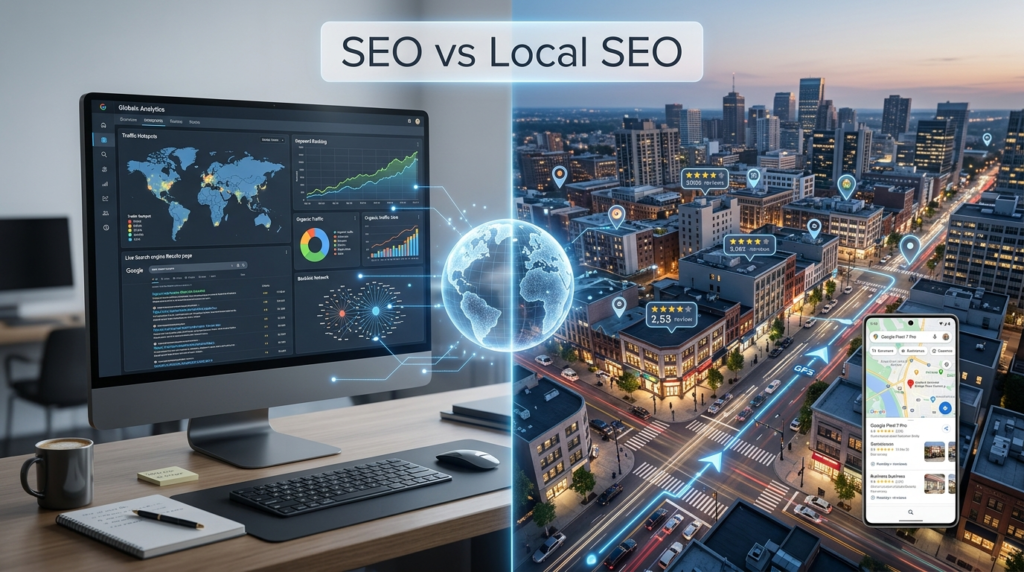
The biggest distinction in SEO vs Local SEO lies in who you want to reach.
Traditional SEO aims to rank websites for users regardless of where they are located. Someone searching for “best accounting software” or “how to improve website speed” could be anywhere in the world, and search engines focus on providing the most relevant content.
Local SEO, however, targets users searching within a specific geographical area. Searches such as “dentist near me,” “coffee shop in Birmingham,” or “electrician in Manchester” trigger location-based search results.
Another major difference is that local optimization places significant importance on business information such as:
- Business location
- Google Business Profile
- Customer reviews
- Local citations
- Maps visibility
- Consistent Name, Address, and Phone Number (NAP)
Businesses looking for professional SEO Services often require technical optimization, content improvements, authority building, and long-term ranking strategies that help them compete across wider markets rather than only local searches.
How Search Intent Changes the Strategy
Search engines don’t simply match keywords—they understand user intent.
Someone searching for “best CRM software” usually wants information, comparisons, or recommendations. Their location has little influence on the results.
On the other hand, someone searching for “car mechanic near me” expects businesses located nearby. Search engines prioritize proximity, relevance, and trust rather than simply the strongest website.
This difference in intent changes nearly every optimization strategy.
Traditional SEO emphasizes:
- Comprehensive content
- Topic authority
- Internal linking
- Website structure
- Backlink growth
Local optimization emphasizes:
- Geographic relevance
- Business listings
- Customer reviews
- Location-specific pages
- Local authority signals
Understanding user intent allows businesses to create content that satisfies searchers instead of simply targeting keywords.
Ranking Factors That Separate SEO from Local Optimization
Although both strategies share several ranking signals, each has unique factors that influence performance.
Traditional SEO relies heavily on:
- High-quality content
- Technical website health
- Keyword optimization
- Domain authority
- Link building
- User experience
Local optimization introduces additional ranking signals, including:
- Distance from the searcher
- Google Business Profile optimization
- Review quantity and quality
- Local citations
- Location relevance
- Local backlinks
Search engines combine these factors differently depending on the type of query. This explains why a business with a smaller website may still appear at the top of local search results if its local presence is stronger.
Which Businesses Should Focus on Traditional SEO?
Not every business depends on local customers.
Companies selling digital products, SaaS platforms, online education, nationwide eCommerce stores, publishers, consultants, and international service providers usually benefit more from broader search visibility.
These businesses compete based on expertise, content quality, authority, and user experience rather than physical location.
Their goal is to attract users searching from multiple cities or countries, making traditional SEO the better long-term investment.
When Local SEO Becomes the Better Choice
Businesses serving customers within a defined service area often achieve stronger results through local optimization.
Examples include:
- Restaurants
- Clinics
- Dentists
- Lawyers
- Plumbers
- Electricians
- Salons
- Gyms
- Real estate agencies
- Repair services
These businesses depend on customers nearby, making map visibility and local search rankings incredibly valuable.
Professional Local SEO Services help improve business listings, location relevance, review management, and local search visibility, increasing the chances of attracting customers who are ready to visit or contact the business.
Can Businesses Use Both SEO and Local SEO Together?
Absolutely.
Many successful businesses combine both strategies instead of choosing only one.
For example, a law firm may publish educational legal articles that rank nationally while simultaneously optimizing location pages to attract clients within specific cities.
Similarly, healthcare providers, franchises, educational institutions, and service companies often build nationwide authority while strengthening their local presence.
Using both approaches creates multiple opportunities to appear in search results, allowing businesses to capture informational searches, commercial searches, and location-based searches simultaneously.
The right balance depends on business goals, competition, and target audience.
Final Thoughts
Choosing between SEO and local optimization isn’t about deciding which strategy is better—it is about selecting the one that matches your business objectives.
If your audience can come from anywhere, traditional SEO offers broader visibility and long-term authority. If customers primarily search for businesses near their location, local optimization becomes essential for generating qualified leads.
As search technology continues to evolve, businesses are also adopting AI SEO Services to improve content strategy, understand search intent, and optimize websites more efficiently. Whether you’re targeting customers across the United kingdom or focusing on a specific local market, understanding SEO vs Local SEO provides the foundation for building a search strategy that delivers sustainable growth and meaningful online visibility.