

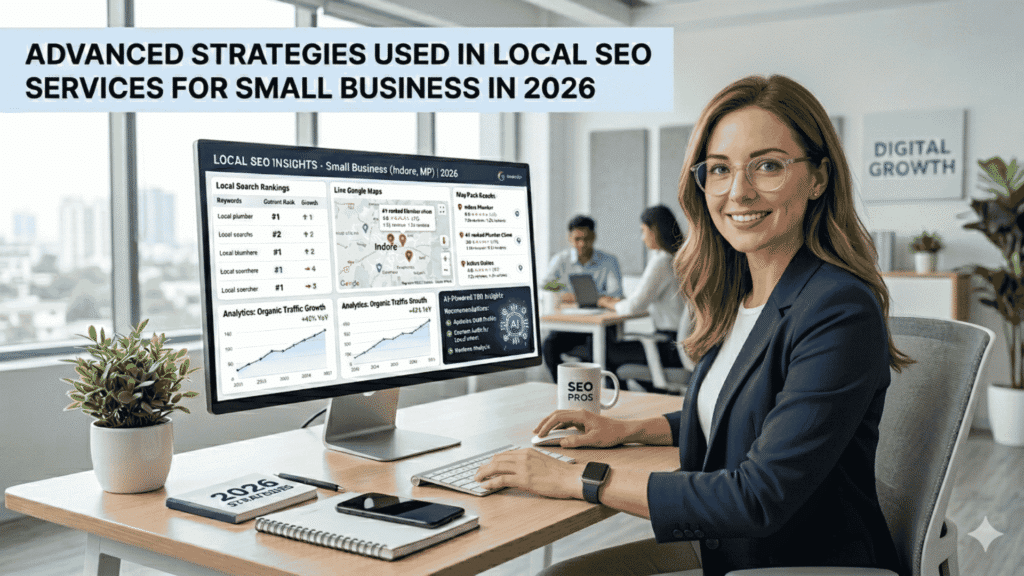
Many small businesses today struggle with one consistent problem—despite having a website and running ads, they still fail to appear in local search results where customers are actively looking for them. Competition has intensified, algorithms have become more intelligent, and traditional optimization methods are no longer enough to sustain visibility. This is where local seo services for small business become a critical growth driver, especially when combined with modern data-driven systems and intent-focused optimization. Businesses that fail to adapt to new search behavior often lose high-intent customers to competitors who understand how local ranking signals actually work in 2026. In fact, many agencies now integrate advanced SEO systems that go far beyond keywords and backlinks.
The evolution of search has made local visibility less about basic listings and more about trust, behavior signals, and entity-based authority. For small businesses, understanding this shift is essential because local seo services for small business are no longer just about being listed—they are about dominating map packs, voice search results, and AI-generated recommendations. Without a structured approach, even well-established businesses can disappear from high-conversion local queries.
Why Local SEO Has Become More Competitive in 2026
Search engines now evaluate businesses based on real-world credibility signals such as engagement, consistency, and topical authority. This means that businesses need a much deeper strategy than before. local seo services for small business now focus heavily on behavioral analytics, search intent mapping, and hyperlocal relevance to maintain ranking stability in crowded markets.
At the same time, search personalization has increased, meaning two users searching the same query may see different results based on location history and behavior patterns. This makes optimization more dynamic and continuous rather than static. In this environment, Local SEO plays a foundational role in ensuring that businesses stay visible across multiple micro-locations and intent clusters instead of relying on a single keyword strategy.
AI-Driven Ranking Intelligence and Predictive Optimization
One of the most advanced shifts in 2026 is the integration of machine learning into ranking strategies. Modern systems now analyze user behavior patterns to predict which businesses should rank higher even before search demand peaks. This is where AI SEO becomes a major advantage, as it allows agencies to anticipate search trends rather than react to them.
AI-driven systems evaluate content engagement, dwell time, click patterns, and local interaction signals to determine authority strength. Instead of manually guessing keywords, businesses now rely on predictive modeling to identify which pages will generate conversions in specific locations. This approach ensures that optimization is proactive rather than reactive, making campaigns significantly more efficient and scalable.
Hyperlocal Authority Building and Entity-Based Optimization
Search engines no longer treat websites as isolated assets. Instead, they connect businesses with real-world entities, locations, and user intent clusters. This shift has made entity-based optimization one of the strongest ranking factors in 2026. Businesses are now required to build authority not just at the city level but also at micro-local levels like neighborhoods and service zones.
For example, a structured approach may involve analyzing competition from providers such as seo company oldbury and seo company bartley green, not to copy them, but to understand how local authority structures differ across regions. Similarly, service intent analysis often includes queries like seo contractors near me, freelance seo specialists near me, and seo marketing company near me to understand how users shift between agency-based and freelancer-based search behavior.
This level of insight allows businesses to build content clusters that match real user intent rather than generic keywords, improving both relevance and conversion rates.
Advanced Content Mapping and Intent Segmentation
Modern optimization is heavily dependent on understanding why users search, not just what they search. Advanced content mapping breaks down user journeys into awareness, consideration, and decision stages. Each stage requires a different type of content structure, internal linking model, and engagement strategy.
High-performing campaigns now integrate semantic clustering where multiple related topics are grouped under a single authority hub. This allows search engines to better understand topical depth and improves ranking consistency across multiple queries. Businesses that fail to implement intent segmentation often experience unstable rankings, even if their backlinks and technical SEO are strong.
Technical Signals and Behavioral Optimization
Technical optimization in 2026 extends beyond page speed and mobile responsiveness. Search engines now measure how users interact with pages after clicking. If users quickly return to search results, rankings decline. If users engage deeply, rankings improve.
This is why modern local seo services for small business focus on improving on-page experience through structured layouts, fast-loading content blocks, and interactive elements that keep users engaged. Behavioral signals such as scroll depth, click-through rates, and repeat visits are now core ranking indicators.
AI-Powered Content Personalization and Local Targeting
Personalization has become a major factor in local rankings. Websites that dynamically adjust content based on user location and intent tend to perform better in competitive markets. This includes dynamically generated service pages, localized testimonials, and geo-specific FAQs.
Advanced systems also combine AI-based clustering with historical search data to refine targeting strategies. This ensures that businesses are not only visible but also relevant to each specific user segment, increasing conversion potential significantly.
Data-Driven Reputation and Review Intelligence
Online reputation is now directly tied to ranking performance. Search engines analyze review frequency, sentiment consistency, and response behavior from business owners. A structured review strategy can significantly improve local visibility, especially in competitive industries.
Businesses that actively manage reviews and respond to customer feedback tend to build stronger trust signals. These signals influence both map rankings and organic search placement, making reputation management an essential part of modern optimization frameworks.
Multi-Channel Local Visibility Integration
In 2026, search visibility is no longer limited to traditional search engines. Businesses must now maintain presence across maps, directories, voice assistants, and AI-generated search summaries. This requires consistent data structuring and unified business information across all platforms.
Advanced strategies ensure that all digital touchpoints reinforce each other, creating a strong ecosystem of trust and authority. This interconnected visibility significantly improves brand recall and customer acquisition rates.
Final Strategic Outlook
The future of local search is heavily driven by automation, intent understanding, and behavioral intelligence. Businesses that continue relying on outdated methods will struggle to maintain visibility in competitive markets. However, those that adopt advanced systems built around data, AI, and user intent will continue to scale effectively.
At its core, local seo services for small business in 2026 are about building long-term digital authority rather than short-term rankings. Businesses that embrace structured optimization, predictive insights, and hyperlocal strategies will remain ahead of algorithm changes and market competition, ensuring consistent growth and visibility in an increasingly intelligent search landscape.