

Search visibility is becoming harder for businesses that rely on outdated content strategies. Many websites publish articles every week, yet their pages still struggle to appear in search results because search engines now evaluate trust, expertise, and real-world usefulness more deeply than before. AI-powered search systems are no longer ranking pages only based on keywords or backlinks. They are measuring whether the information genuinely helps users solve problems.
This shift is changing how businesses approach content creation, especially for brands investing in SEO, AI SEO, and Local SEO strategies. Websites that ignore EEAT principles often experience declining visibility, weaker engagement, and reduced lead quality even when they produce large amounts of content.
Understanding EEAT in Modern Search
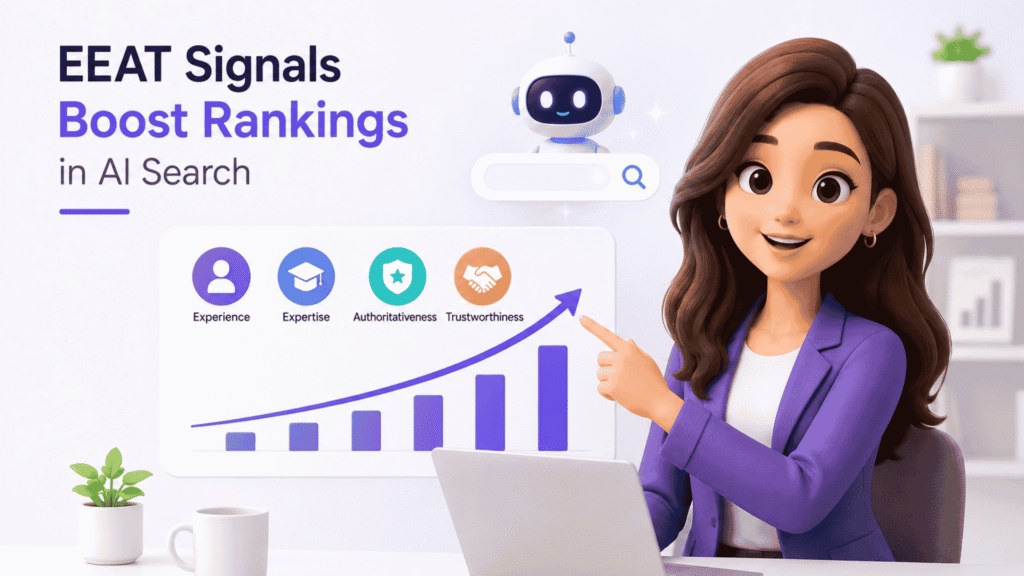
EEAT stands for Experience, Expertise, Authoritativeness, and Trustworthiness. These signals help search engines determine whether a page deserves visibility for important user queries. As AI-driven search becomes more advanced, EEAT has evolved from a quality guideline into a major ranking influence.
Search engines now analyze whether content reflects real-world experience instead of generic information copied from other sources. Websites with practical insights, transparent information, and clear topical authority are increasingly rewarded.
For businesses trying to improve website page ranking, EEAT plays a major role because AI systems evaluate the reliability behind every piece of content. Thin articles designed only for keyword placement are losing visibility to content that demonstrates expertise and authentic user value.
Why AI-Driven Search Changed Ranking Systems
Traditional ranking systems mainly relied on technical optimization, keyword relevance, and backlink authority. AI-driven search introduces a more advanced evaluation process that understands user intent and content depth more accurately.
Modern search algorithms can now identify:
- Whether the content answers real user concerns
- If the author or brand demonstrates subject expertise
- Whether the information appears trustworthy and updated
- How users interact with the page after visiting
- If the content matches the searcher’s intent naturally
This is why businesses that publish generic articles without practical insights often fail to maintain strong rankings. AI systems prioritize useful experiences over repetitive optimization tactics.
Experience Signals Are Becoming Essential
Experience is now one of the strongest differentiators in search visibility. AI search systems prefer content written from practical involvement instead of theoretical explanations.
For example, businesses sharing actual campaign data, case-based insights, or operational challenges create stronger trust signals than websites rewriting information already available online.
A professional working as a seo specialist birmingham may publish insights based on real client campaigns, local competition trends, and user behavior analysis. That practical experience creates stronger credibility compared to generalized content lacking real-world depth.
Search engines increasingly analyze whether the information reflects genuine expertise or simply summarizes existing material from competitors.
Expertise Helps AI Understand Content Quality
Expertise goes beyond adding technical terms or industry jargon. AI search systems evaluate whether the content structure, explanations, and supporting details reflect a deep understanding of the subject.
High-quality content usually demonstrates expertise through:
- Detailed explanations of user problems
- Clear topic structure and relevance
- Accurate terminology used naturally
- Actionable guidance instead of vague advice
- Evidence of ongoing industry understanding
Businesses focusing on educational content rather than promotional writing often build stronger expertise signals over time.
A reliable seo company in birmingham united kingdom typically develops authority by consistently publishing practical content that helps users make informed decisions instead of aggressively selling services.
How Authority Influences AI Search Visibility
Authority is no longer built only through backlinks. AI-driven systems now evaluate broader trust indicators connected to brand reputation and topical consistency.
Search engines analyze factors such as:
- Consistency of content topics
- Mentions across trusted websites
- User engagement patterns
- Brand transparency
- Content originality
- Industry relevance
When websites publish disconnected content purely for traffic generation, authority signals weaken. AI systems prefer websites that maintain clear topical focus and demonstrate sustained expertise in specific subject areas.
A recognized seo company Birmingham city centre may strengthen authority by consistently covering local business search trends, technical optimization, and AI search behavior rather than publishing unrelated articles solely for keyword reach.
Trustworthiness Is the Core EEAT Factor
Among all EEAT components, trustworthiness often carries the greatest influence because inaccurate or misleading information creates poor user experiences.
AI search systems assess trust through:
- Transparent business details
- Accurate and updated content
- Secure website experience
- Honest claims and statistics
- Clear authorship information
- Consistent brand messaging
Websites making exaggerated promises or publishing misleading information may lose visibility even if their technical optimization is strong.
Trust also affects user behavior. When visitors quickly leave a page because the information appears unreliable, AI systems interpret this as a weak quality signal.
Search Intent Matters More Than Keyword Density
One major change in AI-driven search is the shift away from keyword-heavy writing. Search engines now focus more on intent alignment than repetitive optimization.
Many businesses still over-optimize content by inserting keywords unnaturally across paragraphs. However, AI systems evaluate whether the page genuinely satisfies the reason behind the search query.
Improving website page ranking now requires understanding:
- What problem users are trying to solve
- What information they expect immediately
- Which format improves comprehension
- Whether the page fully addresses the query
A content strategy built around user intent creates stronger engagement, higher trust, and longer-term ranking stability.
EEAT and Local Search Performance
Local businesses are heavily affected by EEAT because search engines evaluate geographic relevance alongside trust signals.
For example, a birmingham city centre seo company may improve local visibility through:
- Accurate local business information
- Location-specific content
- Genuine customer reviews
- Local industry expertise
- Consistent service details across platforms
AI systems increasingly connect local trust with search relevance. Businesses that demonstrate strong local authority often gain better visibility in competitive regional searches.
Similarly, an all seo company in Birmingham competing in crowded markets cannot rely only on backlinks or directory listings anymore. EEAT signals now influence how search systems determine which local businesses deserve visibility.
How Businesses Can Strengthen EEAT Signals
Improving EEAT requires long-term content quality improvements rather than short-term ranking tactics.
Businesses should focus on:
Create Experience-Based Content
Publish insights from real campaigns, practical challenges, and measurable outcomes instead of rewriting generic information.
Improve Author Transparency
Clearly identify who created the content and demonstrate their industry understanding.
Focus on Topical Depth
Build content clusters around related subjects to strengthen authority in a specific niche.
Update Content Regularly
AI systems favor accurate and current information, especially in industries that evolve quickly.
Prioritize User Experience
Fast-loading pages, clear formatting, and helpful navigation improve trust signals significantly.
Match Search Intent Precisely
Content should solve the user’s actual problem instead of chasing keyword placement alone.
The Future of Website Visibility in AI Search
AI-driven search is pushing businesses toward higher-quality digital experiences. Search engines are becoming more capable of identifying authentic expertise, trustworthy information, and content that genuinely helps users.
As this evolution continues, businesses relying on manipulative optimization tactics may struggle to maintain stable visibility. Sustainable growth increasingly depends on experience-driven content, strong topical authority, and trust-focused publishing strategies.
For brands aiming to improve website page ranking, EEAT is no longer optional. It has become a foundational part of how AI systems evaluate credibility, relevance, and long-term search value. Websites that consistently provide accurate, experience-based, and intent-focused information are more likely to achieve lasting visibility in the future of search.