

Why Most Websites Struggle to Rank Even After Publishing Content
Many businesses spend months publishing blogs, optimizing pages, and updating websites, yet their rankings barely move. The biggest frustration comes when competitors with fewer backlinks or smaller websites appear above them in search results. In many cases, the issue is not poor writing or weak design. The real problem is the absence of topical authority and semantic relevance.
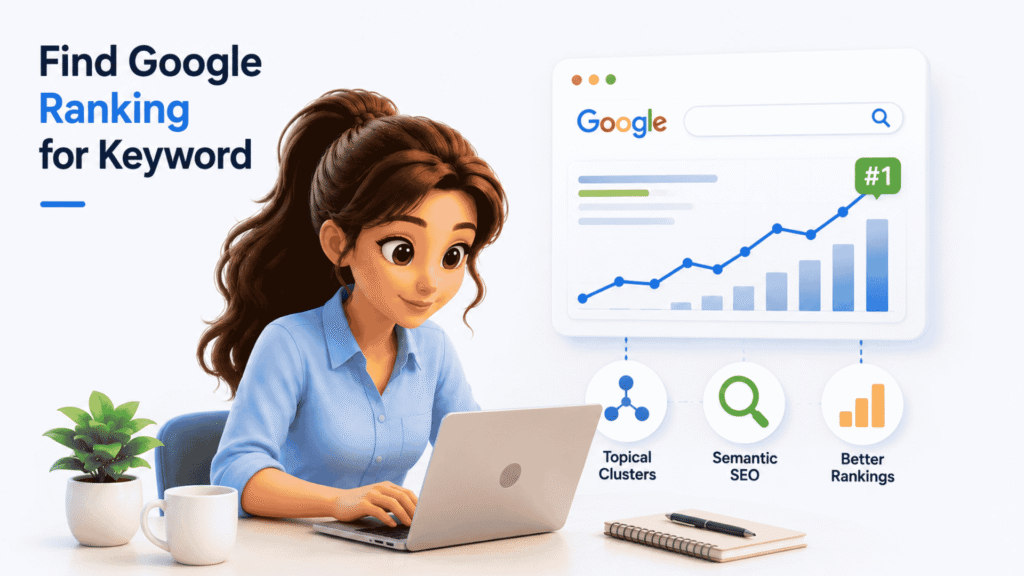
Modern search engines no longer rank pages based only on exact-match keywords. Google now evaluates how deeply a website understands a topic, how pages connect together, and whether the content genuinely satisfies search intent. This is why brands trying to find google ranking for keyword performance often discover that isolated content strategies fail to produce long-term visibility.
Search algorithms have evolved significantly because of advancements in machine learning, entity recognition, and user behavior analysis. A single optimized article is rarely enough anymore. Websites need structured topic ecosystems supported by semantic relationships and strategic internal linking.
Understanding Topical Clusters in Modern Search
Topical clusters are groups of interconnected content pages built around a central subject. Instead of publishing unrelated articles, websites create a pillar page supported by multiple detailed subtopics. This structure helps search engines understand the depth of expertise within a website.
For example, a business targeting SEO-related searches may build a central guide around technical optimization and support it with detailed pages covering crawling, indexing, schema, page speed, internal linking, and content intent.
This approach improves three important ranking signals:
- Contextual relevance
- Topical authority
- User navigation experience
When search engines crawl these connected pages, they can better understand how the information relates semantically. As a result, rankings become more stable across multiple keywords rather than depending on a single page.
The Role of Semantic SEO in Google Rankings
Semantic optimization focuses on meaning instead of keyword repetition. Google analyzes entities, relationships, context, and intent to determine whether a page deserves visibility.
Traditional keyword stuffing no longer works effectively because search engines understand variations, synonyms, and contextual relationships. Semantic optimization helps content rank for broader query combinations without overusing exact phrases.
For example, a page discussing technical optimization may naturally include concepts such as:
- search intent
- crawlability
- user engagement
- indexing
- topical relevance
- content depth
This improves contextual understanding and expands ranking opportunities organically.
Businesses investing in advanced content strategies increasingly combine semantic optimization with AI-powered data analysis. This has contributed to the growth of AI SEO methodologies focused on entity mapping, search behavior prediction, and intent modeling.
Building a Practical Topical Cluster Strategy
A successful topical cluster strategy begins with identifying the core subject your audience searches for repeatedly. Instead of focusing only on high-volume keywords, it is important to identify informational pathways users follow before conversion.
Step 1: Create a Central Pillar Topic
The pillar page should cover the main topic comprehensively while remaining easy to navigate. It acts as the primary authority page connected to supporting articles.
The page should include:
- foundational concepts
- practical examples
- strategic explanations
- internal links to subtopics
- FAQ sections
- intent-focused headings
A strong pillar page helps search engines establish subject expertise.
Step 2: Develop Supporting Semantic Articles
Supporting pages should answer highly specific user questions. Each article must explore a unique angle rather than repeating information from the pillar page.
Examples include:
- content structure optimization
- entity-based keyword research
- semantic internal linking
- topical authority frameworks
- user behavior signals
- content freshness strategies
This layered structure creates semantic depth across the website.
Step 3: Use Strategic Internal Linking
Internal links are critical in topical clustering because they establish contextual relationships between pages. Random linking patterns provide little value.
Effective internal linking should:
- connect related concepts logically
- guide users toward deeper information
- reinforce semantic relationships
- distribute authority efficiently
Search engines use these patterns to understand content hierarchy and topical coverage.
Why Search Intent Matters More Than Keyword Density
One of the biggest ranking mistakes websites make is targeting keywords without understanding user intent. Search engines categorize intent into informational, navigational, transactional, and commercial investigation queries.
If the content format does not match the intent behind the query, rankings often remain unstable.
For instance:
- Informational searches require educational depth
- Transactional searches need conversion-focused pages
- Comparison searches require detailed evaluations
- Local queries need geographic relevance
This is especially important in Local SEO campaigns where user proximity, relevance, and local trust signals strongly influence rankings.
Businesses competing in regional markets often fail because they optimize only for keywords while ignoring user intent patterns.
Semantic SEO and Entity Optimization
Google increasingly relies on entities rather than isolated keywords. Entities include brands, people, services, industries, and concepts connected through contextual meaning.
Entity optimization involves:
- mentioning related concepts naturally
- using structured content organization
- improving topical consistency
- creating context-rich paragraphs
- avoiding thin content
For example, businesses operating in regional markets may build authority through location-based semantic associations tied to industry expertise.
A strong content ecosystem naturally creates these relationships without forcing keywords unnaturally into the text.
Measuring Topical Authority Performance
Many websites focus only on keyword position tracking, but topical authority requires broader performance analysis.
Key indicators include:
- increase in ranking keyword diversity
- improved crawl frequency
- longer session durations
- higher page discovery rates
- stronger internal page visibility
- increased impressions across related queries
A well-built cluster strategy often leads to multiple pages ranking simultaneously for semantically connected searches.
This creates stronger domain-level authority over time.
Common Mistakes That Damage Semantic Rankings
Several content practices weaken semantic relevance and reduce ranking potential.
Publishing Isolated Content
Random blog creation without topic relationships prevents authority development.
Overusing Exact-Match Keywords
Aggressive repetition makes content unnatural and weakens readability signals.
Ignoring User Journey Mapping
Content should guide users progressively through awareness, consideration, and decision stages.
Weak Internal Linking
Disconnected pages reduce crawl efficiency and contextual understanding.
Thin Supporting Content
Short articles with little informational value dilute topical strength.
Avoiding these issues helps websites build long-term search visibility instead of temporary ranking spikes.
How Professional SEO Strategies Improve Topical Visibility
Modern optimization requires a balance between technical precision, content quality, and semantic architecture. Experienced agencies often use advanced frameworks to map user intent, semantic entities, and topical relationships before creating content.
Businesses working with experienced teams such as seo firms Birmingham often prioritize long-term topical authority rather than isolated ranking gains. Similarly, a skilled birmingham seo specialist understands how semantic structures influence crawl behavior and search relevance across competitive industries.
Websites aiming for sustainable organic growth increasingly rely on structured content ecosystems developed by seo experts birmingham who focus on entity-driven optimization strategies. Regional businesses also benefit from targeted semantic planning implemented by agencies like seo company great barr and seo company kings norton when competing within localized search environments.
The Future of Semantic Search Optimization
Search engines continue evolving toward predictive intent analysis and contextual understanding. As algorithms become more sophisticated, websites relying only on traditional keyword targeting will struggle to maintain visibility.
Future-focused SEO strategies emphasize:
- topic ecosystems
- semantic relationships
- user experience signals
- entity authority
- content depth
- behavioral satisfaction metrics
This shift makes structured topical clustering one of the most reliable long-term ranking approaches.
Businesses that invest in semantic architecture today are more likely to achieve sustainable visibility tomorrow. The ability to find google ranking for keyword opportunities now depends less on isolated optimization tactics and more on building comprehensive topical relevance across the entire website.