




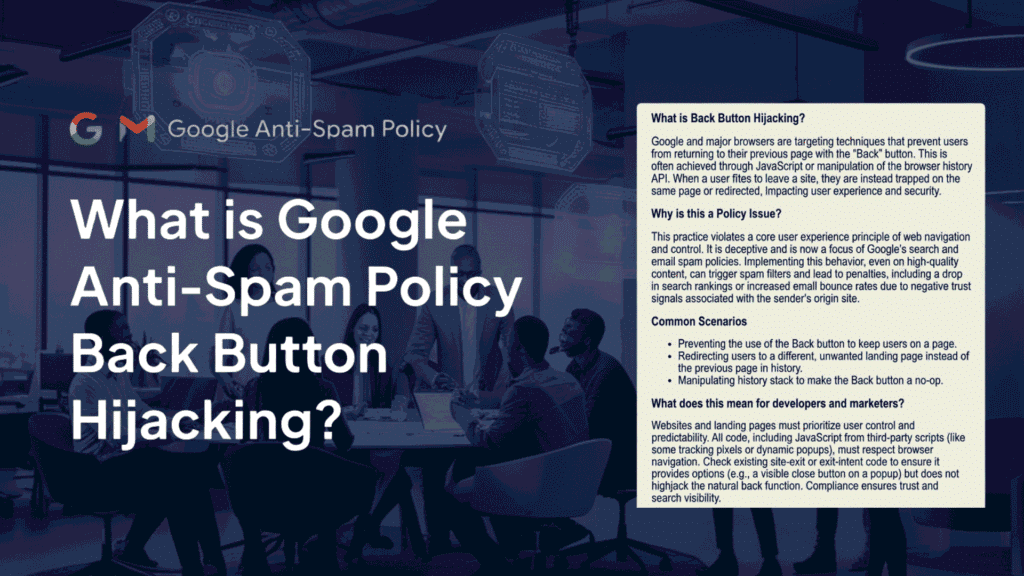
Google has officially updated its spam policies to include “back button hijacking” as a violation under its malicious practices guidelines. This update highlights Google’s ongoing effort to ensure users have a smooth, predictable, and trustworthy browsing experience across the web.
What Is Back Button Hijacking?
Back button hijacking is a practice where a website interferes with a user’s ability to navigate using their browser normally.
Instead of allowing users to return to the previous page by clicking the back button, the site may:
- Redirect the user to a completely different page that they never intended to visit, often for promotional or monetization purposes
- Display intrusive ads, popups, or recommended content that interrupts the expected navigation flow
- Prevent the user from leaving the current page entirely, forcing repeated clicks or trapping them in a loop
This creates a clear mismatch between what users expect and what actually happens, which Google considers a deceptive and harmful experience.
Policy Enforcement Timeline
Google has announced a clear timeline for enforcement:
- Website owners are being given a short window to review their sites and identify any potential violations related to navigation manipulation
- This advance notice is intended to help developers, publishers, and businesses make necessary changes before penalties begin
- After this date, both automated systems and manual reviews may start applying penalties to non-compliant sites
Who This Policy Will Affect
This anti spam policy specifically targets websites that engage in manipulative or deceptive navigation practices, including:
- Websites that use custom scripts or code to alter browser history behavior in a way that overrides or disables the natural back button function
- Sites that redirect users to unrelated or unexpected pages when they attempt to go back, often to increase page views or ad impressions artificially
- Platforms that insert additional or fake pages into the user’s browsing history, making it harder to exit the site smoothly
- Websites where this behavior is not intentional but caused by third-party integrations such as ad networks, plugins, tracking scripts, or embedded libraries
Who Will Not Be Affected
Websites that follow standard web practices and prioritize user experience will not be impacted by this update, including:
- Sites that allow users to navigate freely without interfering with browser controls or expected behavior
- Platforms that avoid deceptive design patterns and do not attempt to manipulate user actions for engagement or revenue
- Websites that use clean, transparent navigation structures and follow Google’s existing Search Essentials guidelines
- Businesses and creators who focus on delivering helpful, relevant content without relying on forced interactions or misleading techniques
Potential Impact on Websites
Websites found violating this anti spam policy may experience several negative consequences, such as:
- Receiving manual spam actions from Google’s review team, which can directly affect search visibility and trust signals
- A noticeable drop in rankings for affected pages or even across the entire site, depending on the severity of the issue
- Reduced organic traffic due to lower visibility in search results, which can impact revenue, leads, and overall performance
- In more serious or repeated cases, partial or complete removal of pages from Google’s search index
What Site Owners Should Do
Google recommends that all website owners take proactive steps to ensure compliance:
- Carefully review all JavaScript code, especially anything related to navigation, redirects, or browser history manipulation
- Audit third-party tools such as advertising platforms, popup builders, or analytics scripts that may unintentionally introduce this behavior
- Test the website manually across different devices and browsers to confirm that the back button works exactly as users expect
- Remove or disable any scripts, plugins, or configurations that interfere with normal navigation or create misleading user journeys
- If a site has already been affected, fix the issue completely and submit a reconsideration request through Google Search Console for review
Why Google Updated This Anti Spam Policy
Google introduced this update in response to a growing number of websites using manipulative techniques that negatively impact user experience:
- Back button hijacking disrupts the natural browsing flow, making it difficult for users to control their own navigation
- It creates frustration and reduces trust, especially when users feel trapped or misled by a website’s behavior
- Many of these practices are used to artificially increase engagement metrics, which goes against fair and transparent ranking principles
- By explicitly defining this as a spam violation, Google aims to maintain a safer, more reliable, and user-first web environment
Final Note
This update reinforces a consistent direction from Google:
Websites should prioritize user experience, transparency, and trust over manipulative tactics.
Sites that follow clean practices and respect user navigation will remain unaffected, while those relying on deceptive methods may face serious consequences.